


What does leaky gut mean?
“Leaky gut” is a commonly used term for increased intestinal permeability. It describes a change in how easily substances can pass through the intestinal barrier.
The intestinal barrier consists, among other things, of cells in the intestinal lining that are closely connected to one another. Between these cells are structures called tight junctions, which help regulate what can pass from the gut into the bloodstream.
To clarify:
- Increased intestinal permeability – a biological phenomenon that can be studied and measured.
- Leaky gut – a popular term often used to describe increased intestinal permeability.
- Medical diagnosis – “leaky gut” is not, by itself, a specific medical diagnosis.
What does the intestinal barrier do?
The intestinal barrier acts as a boundary between the contents of the gut and the rest of the body. It helps to:
- regulate what passes from the gut into the body
- support the absorption of nutrients
- protect the intestinal lining from potentially harmful substances
- interact with the immune system
- create a functioning environment for the gut microbiota
The intestinal barrier is therefore an important part of the interaction between the contents of the gut, the gut microbiota and the immune system.
What can affect the intestinal barrier?
The function of the intestinal barrier can be influenced by several factors. Research has examined the importance of:
- diet and nutrient intake
- alcohol
- infections
- inflammation
- stress
- medications
- changes in the gut microbiota
- different health conditions
Intestinal permeability is influenced by an interaction between several factors rather than one single cause.
What symptoms can be associated with leaky gut?
There is no specific pattern of symptoms that can confirm increased intestinal permeability.
Symptoms such as bloating, gas, diarrhea, constipation and abdominal pain are sometimes associated with the term leaky gut. However, these symptoms can have many other causes and are therefore not enough to determine whether a person has increased intestinal permeability.
Is there a connection between SIBO and leaky gut?
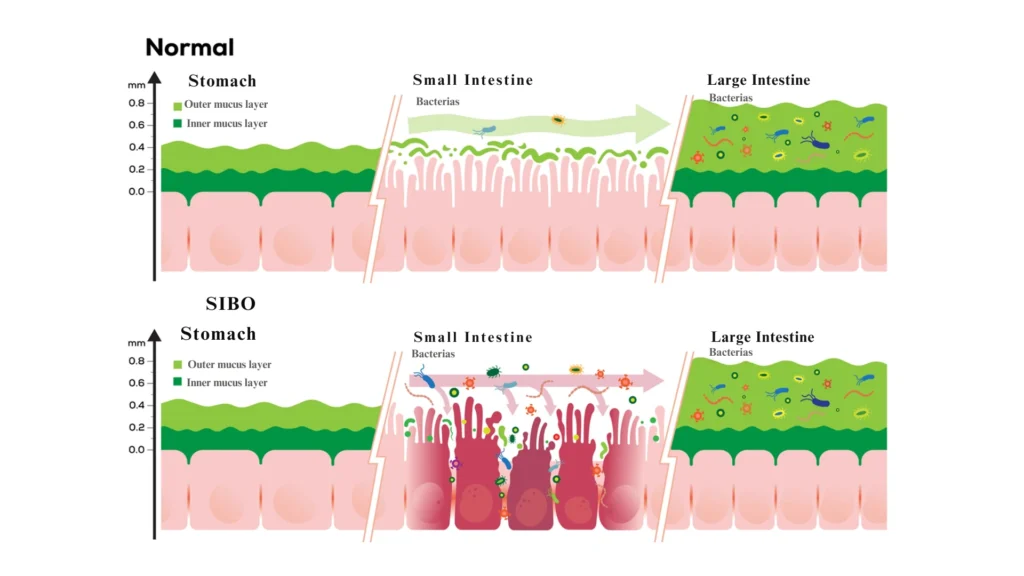
SIBO stands for Small Intestinal Bacterial Overgrowth, or bacterial overgrowth in the small intestine. This means that there is an abnormally high amount of bacteria in the small intestine, which can affect the intestinal environment and permeability.
Research has examined the relationship between SIBO, the gut microbiota and intestinal barrier function. Altered intestinal permeability and SIBO can occur at the same time, but the relationship is not fully understood.
Can stress affect the intestinal barrier?
Yes. Stress affects communication between the brain and the gut and can change gastrointestinal function.
Long-term stress can reduce vagus nerve activity, which may result in reduced intestinal motility and reduced activity of the important valve between the small and large intestine. This valve normally helps prevent bacteria from the large intestine from entering the small intestine.
Research has also examined how stress itself can affect intestinal barrier function.
The relationship is complex and influenced by several other factors. Stress should therefore be viewed as part of the overall picture rather than as a single cause.
Can diet affect the intestinal barrier?
Yes. Diet affects both the intestinal environment and the bacteria living there.
A varied diet containing sufficient fiber can contribute to a diverse gut microbiota. When certain fibers are broken down by gut bacteria, short-chain fatty acids such as butyrate are produced. Butyrate has been studied for its role in intestinal barrier function.
This does not mean that one particular food can “seal” the gut. What works for the digestive system can also vary from person to person.
If certain foods regularly cause digestive problems, it may be useful to test for SIBO and increased intestinal permeability as possible underlying factors rather than experimenting with and eliminating large parts of the diet on your own.
The possibilities of addressing SIBO through dietary changes are very limited, since providing fiber, regardless of its type, can provide nutrients for bacteria in the small intestine. SIBO is sometimes described as being like a cuckoo chick because it takes advantage of nutrients from food at the expense of the host.
How can you support a functioning intestinal barrier?
There is no single approach that works for everyone. In general, when SIBO is present, this needs to be addressed first (see GutClear® or similar botanical products with bacteria-balancing properties).

If SIBO is not present, the following habits can generally support healthy digestive function:
- Eat a varied diet and get enough nutrients.
- Prioritize regular sleep and recovery.
- Stay physically active according to your own abilities.
- Find stress-management strategies that work for you, such as yoga, mindfulness or breathing exercises.
- Avoid unnecessarily restrictive diets.
- Seek medical advice if you have persistent or recurring digestive symptoms.
How is increased intestinal permeability investigated?
Intestinal permeability can be investigated using different methods. One method used in research is the sugar permeability test, where substances such as lactulose are used to study how substances pass through the intestinal barrier.
It is important to distinguish between measuring intestinal permeability and making a medical diagnosis. Test results therefore need to be interpreted in context.
Can you test for leaky gut?
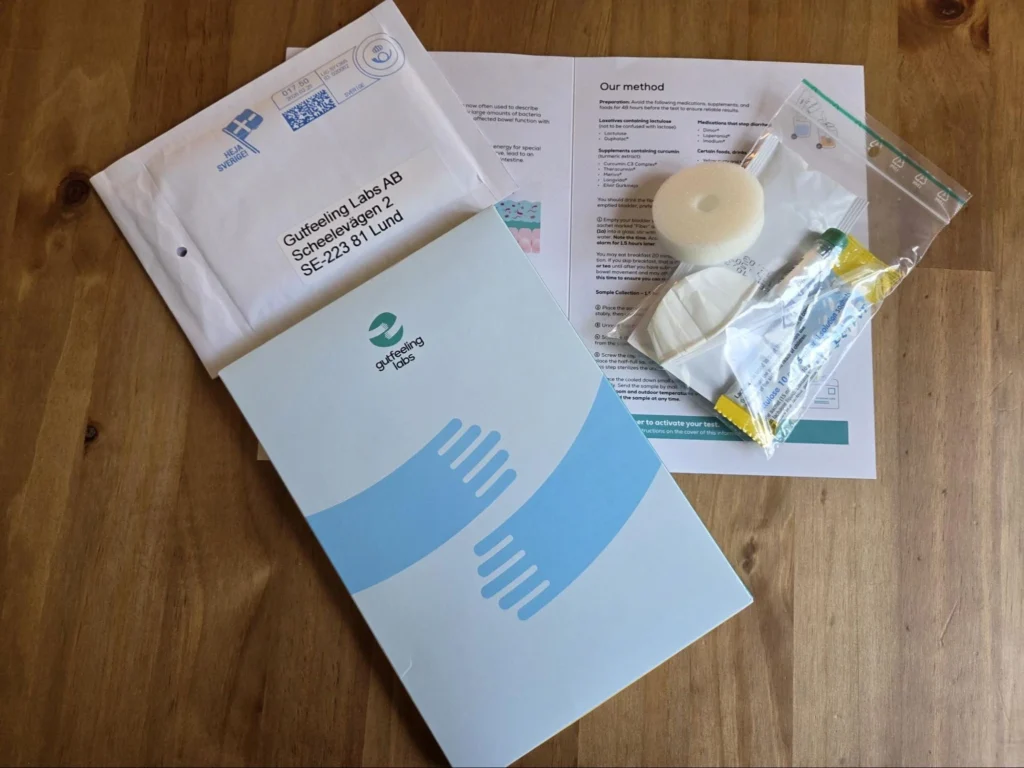
Gutfeeling Labs offers a home urine test that analyzes markers associated with SIBO, intestinal permeability and bacterial metabolites.
The test is designed to provide information about certain biological markers and should not be considered a standalone diagnostic test for disease.
Read more about the Gutfeeling Labs Gut Test.